15 Best R&D Project Management Tools For Scientists And Engineers
Best R&D Project Management Software For Smarter Innovation
I’ve worked on enough research projects to know how quickly things can get messy, too many tools, unclear goals, and endless data scattered across systems. That’s why I rely on R&D project management softwareto bring everything together.
These platforms make research more streamlined and focused. I can plan experiments, assign tasks, and track real progress instead of guessing what’s happening next. The best part is how they link every R&D effort to real business outcomes, not just ideas on paper.
From structured systems like Planisware and Sopheon to innovation platforms like ITONICS and Brightidea, these tools turn complex research workflows into something clear, measurable, and manageable. They don’t just organize projects; they help innovation move faster and smarter.
What Is R&D Project Management Software?

R&D project management software is a digital platform that helps organizations plan, track, and manage research and innovation projects. Unlike general project tools, it supports complex, iterative workflows where outcomes aren’t always certain.
These platforms integrate project planning, experiment tracking, documentation, collaboration, and compliance in one place. They allow R&D managers to align research goals with company strategy, monitor resource usage, and capture insights from failed and successful experiments alike.
In short, they turn creative research into structured innovation, without slowing teams down.
Core Features Of The Best R&D Project Management Software
R&D teams need more than task lists and calendars. Here are the features that truly make a difference:
1. Advanced Project Planning And Portfolio Management
Good software lets you view all ongoing research activities in one dashboard. Portfolio tools help prioritize high-impact projects, track funding sources, and align goals with business strategy.
2. Experiment And Data Tracking
Unlike standard projects, R&D involves multiple iterations. The best tools let researchers log experiments, attach results, and track revisions. This same level of tracking is helpful in project planning for a new business launch, ensuring every step, from testing ideas to final execution, is documented and easy to review.
3. Cross-Functional Collaboration
R&D projects often involve scientists, engineers, designers, and marketing teams. Built-in communication tools, comments, real-time updates, and shared workspaces, ensure smooth teamwork.
4. Compliance And Documentation
For industries eligible for R&D tax credits or subject to audits, detailed documentation is essential. Leading software automates record-keeping to meet standards like ISO, FDA, or EU R&D regulations.
5. Resource And Budget Management
R&D budgets are large and complex. Software with built-in cost tracking and resource allocation prevents overspending and highlights financial efficiency across the portfolio.
6. Integration And Scalability
Good systems connect easily with existing tools, from data management platforms to accounting systems. Many also integrate with presentation apps, allowing seamless reporting and sharing of research outcomes.
How To Choose The Right R&D Project Management Software

Selecting software is more than a feature comparison. It’s about finding a system that fits your organization’s culture and research maturity.
Here’s a proven approach:
- Start with your workflow. Map how projects move through your R&D pipeline. Identify where bottlenecks happen.
- List must-have features. Prioritize essentials like experiment tracking, compliance tools, or integration with existing platforms.
- Test with real users. Let scientists, project managers, and finance teams all test the system before purchase. Their needs differ.
- Check scalability. The tool should handle more projects and users as your R&D grows.
- Review data ownership and security. Sensitive research data must be protected, especially for patented work.
If you can, start with a small pilot before rolling out the platform organization-wide. This helps teams adapt and uncover hidden challenges early.
R&D Project Management Software
1. Planisware
Planisware is one of the most advanced tools for research and development project management. It supports every stage of R&D, from planning and budgeting to execution and reporting.
Many large organizations, including those in pharma, aerospace, and manufacturing, rely on it to manage complex product pipelines. Its detailed dashboards help teams track performance, allocate resources, and handle long-term planning.
Pros:
- Excellent for managing large and complex R&D portfolios
- Strong reporting and forecasting features
- Scalable for enterprise needs
Cons:
- Can be expensive for small teams
- Takes time to set up and learn

2. Accolade By Wellspring (formerly Sopheon)
Accolade is an end-to-end R&D lifecycle management platform that connects strategy, innovation, and execution. It helps organizations move from idea generation to project delivery in a structured and traceable way. The platform supports “InnovationOps”, a modern approach that ensures R&D and business strategy stay aligned.
Companies use Accolade to prioritize R&D projects, monitor resources, and ensure each innovation contributes to long-term goals. It also includes strong governance tools for regulated industries, making it ideal for managing high-stakes innovation portfolios.
Pros:
- Aligns R&D work directly with company strategy
- Supports cross-department collaboration and governance
- Great for managing innovationcycles
Cons:
- Interface can feel a bit dated
- Integration with some third-party tools may require customization
3. ITONICS Innovation OS
ITONICS is a modern innovation management software built to help companies turn ideas into real R&D projects. It combines tools for trend scouting, idea collection, roadmapping, and portfolio management, all in one place.
Teams can use ITONICS to identify market trends, evaluate new concepts, and track them as they move through the research and product development stages. Its visual dashboards and collaboration tools make it easier to manage a continuous innovation pipeline.
Pros:
- Strong focus on trend and idea management
- Visual and easy-to-navigate interface
- Helps turn early ideas into structured R&D projects
Cons:
- Advanced analytics may require higher-tier plans
- Limited offline functionality
4. HYPE Innovation
HYPE Innovation uses AI to help companies capture, evaluate, and manage new ideas for R&D. The platform supports global teams running innovation programs, offering tools for ideation, project validation, and funding workflows.
HYPE bridges the gap between brainstorming and actual R&D projects. It helps you filter the best ideas, validate them with data, and move them into production. With AI suggestions and flexible governance, it’s great for large companies managing innovation across many teams or countries.
Pros:
- Excellent AI-driven idea evaluation
- Strong project validation workflows
- Good fit for global innovation teams
Cons:
- May be too feature-heavy for smaller teams
- Requires training to unlock full value
5. Brightidea

Brightidea is a leading idea and innovation management software that helps companies collect, organize, and prioritize ideas for R&D. It offers modules like “Challenges,” “Hackathons,” and “Labs,” where employees and teams can submit and refine ideas.
Once ideas are submitted, Brightidea helps evaluate their potential and track how they evolve into funded R&D projects. It’s designed to make innovation scalable and measurable, so leaders can see the impact of every idea on business outcomes.
Pros:
- Excellent for crowdsourcing and managing ideas
- Easy-to-use interface for non-technical users
- Good reporting and impact-tracking tools
Cons:
- Can get expensive as the user base grows
- Limited customization in some modules
6. Planview
Planview helps organizations manage product development, capacity planning, and delivery all in one system. It’s widely used in R&D because it connects strategy, portfolio management, and team execution seamlessly.
The tool allows teams to visualize product roadmaps, track progress, and manage resources across departments. With Planview, decision-makers can easily see which projects are most valuable, where bottlenecks exist, and how to align teams with long-term innovation goals.
Pros:
- Excellent visualization for portfolios and roadmaps
- Strong collaboration and capacity planning tools
- Integrates well with other enterprise systems
Cons:
- Complex setup for new users
- Interface could be more intuitive
7. Meisterplan
Meisterplan focuses on helping R&D teams plan resources efficiently. It’s ideal for companies that run multiple projects and need to manage staff, budgets, and time effectively. The platform’s scenario planning helps teams decide which projects to prioritize and who should handle them.
It offers clear visual dashboards showing workloads and capacity limits, making it easier to avoid overloading teams. Meisterplan’s simplicity and fast setup make it a good fit for R&D organizations needing flexible planning tools.
Pros:
- Simple and quick to implement
- Excellent resource and scenario planning
- Great for preventing over-allocation
Cons:
- Limited analytics compared to larger platforms
- Not ideal for complex portfolio governance
8. Jira
Jira by Atlassian is one of the most popular project management tools for R&D teams that follow agile or hybrid workflows. It helps track experiments, tasks, bugs, and features in real time. R&D teams can use boards, sprints, and reports to stay organized and transparent throughout the research process.
Jira integrates with hundreds of tools like Confluence, Slack, and GitHub, making it easy to connect research data and documentation. It’s flexible, customizable, and widely used in software and hardware R&D environments.
Pros:
- Ideal for agile and iterative R&D workflows
- Strong integrations and automation
- Excellent reporting and tracking tools
Cons:
- Can feel overwhelming for non-technical users
- Needs customization to fit non-software R&D teams
9. MasterControl
MasterControl is a cloud-based quality management and R&D platform used in life sciences, biotech, and manufacturing industries. It ensures research teams follow proper documentation, regulatory, and compliance standards throughout the innovation process.
The platform connects R&D documentation, testing results, and approvals in one secure system. It’s perfect for companies that must comply with strict industry standards such as FDA, ISO, or EMA regulations while maintaining high innovation speed.
Pros:
- Excellent for regulated R&D environments
- Strong document and quality control
- Helps maintain compliance and traceability
Cons:
- Focused mainly on quality-driven industries
- Setup can be complex for smaller teams
10. Sciforma

Sciforma is a project and portfolio tool that helps teams plan, track, and control R&D work. It supports both Agile and Waterfall methods, so mixed teams can use the same system.
Sciforma gives managers dashboards for budgets, schedules, and resource use. It also helps compare project performance so you can decide which R&D efforts to keep funding.
Pros:
- Flexible: supports different project methods (Agile, Waterfall, hybrid).
- Solid portfolio and budget tracking for mid-size to large teams.
- Customizable dashboards for managers and execs.
Cons:
- Fewer ready-made third-party integrations than some competitors.
- Interface feels a bit old compared with newer apps.
- May need configuration help for complex setups.
11. ClickUp
ClickUp is a simple, modern workspace where R&D teams can run tasks, documents, and timelines. It offers templates, automations, and views (list, board, timeline) to match how teams work.
ClickUp is fast to set up, so small R&D groups can get organized quickly and start tracking experiments and milestones.
Pros:
- Affordable and quick to adopt for small and mid teams.
- Many templates and automation options to speed setup.
- Built-in docs, tasks, and chat reduce tool switching.
Cons:
- Not built specifically for R&D portfolio management.
- Too many features can feel cluttered without rules.
- Advanced reporting is limited compared to enterprise tools.
12. Asana
Asana helps teams break big R&D projects into smaller tasks and track who does what. It uses timelines, boards, and goals to keep work visible. Asana is friendly for non-technical staff, so cross-functional R&D teams (researchers, product managers, marketers) can all work in one place and follow progress easily.
Pros:
- Very easy to use and good for cross-functional teams.
- Clean visual timelines and task lists for tracking experiments.
- Strong collaboration features (comments, files, approvals).
Cons:
- Lacks deep portfolio or resource planning for large R&D programs.
- Reporting and forecasting are basic unless you add integrations.
- Can become costly as teams scale and need advanced features.
13. Innoscript
Innoscripta helps organizations manage the full R&D process, from funding applications to project tracking and reporting. It’s designed for research-driven companies and universities that need to organize multiple projects and meet compliance rules.
The platform links funding opportunities with active projects, making it easier to secure grants and monitor results. R&D teams can also manage costs, documents, and timelines in one place.
Pros:
- Combines funding and R&D project management.
- Good for academic and industry collaboration.
- Helps manage compliance and reporting easily.
Cons:
- Suited mostly for larger research teams.
- Interface can feel complex at first.
- Limited third-party integrations.
14. PLANTA Project
PLANTA Project helps companies manage complex R&D programs with precision. It tracks budgets, capacity, and schedules while allowing both Agile and traditional workflows.
The platform is reliable for engineering and manufacturing R&D where detailed control is needed. Dashboards make it easier to see resource use and overall portfolio health.
Pros:
- Strong in budget and capacity planning.
- Supports hybrid project methods.
- Excellent for structured, regulated R&D.
Cons:
- Interface looks dated.
- Setup takes time for new users.
- Not ideal for small or flexible teams.
15. Monday.com Work OS
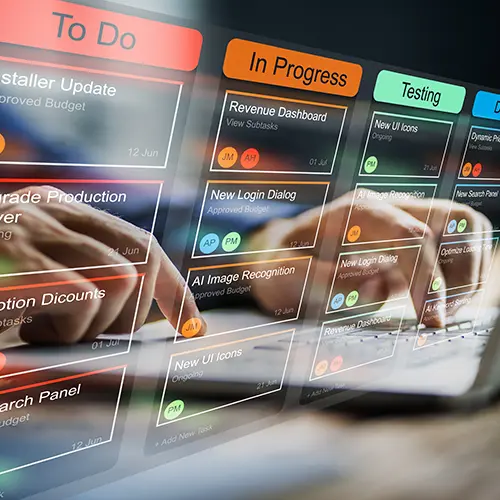
Monday.com gives R&D teams a colorful, visual workspace for managing projects and experiments. It’s easy to customize with boards, templates, and automations, so teams can track progress, share updates, and stay aligned.
It’s great for mixed teams where researchers, engineers, and business units work together. Integrations with Slack, Teams, and Google Drive make collaboration fast and simple.
Pros:
- Very user-friendly and visual.
- Highly customizable workflows.
- Good integrations for team communication.
Cons:
- Limited resource and portfolio management.
- Pricing can rise with more users.
- Basic reporting tools for large R&D setups.
Common Mistakes To Avoid
Even the best software fails if it’s used poorly. These are common traps to avoid:
- Bringing in experts in engineering technologyfrom the start ensures that the software aligns with complex technical workflows. Ignoring this input can lead to misalignment between tools and team needs.
- Skipping change management. Teams resist new systems if they don’t understand the benefits. Train and involve them early.
- Over-customization. Too many add-ons or settings can slow performance. Keep the setup simple and consistent.
- Ignoring integration. If your R&D software doesn’t connect with data systems or accounting tools, silos will remain.
- Neglecting compliance. Always ensure the platform meets documentation standards for audits and tax incentives.
- Forgetting culture. Software should support collaboration, not bureaucracy. Keep the human element in focus.
People Also Ask
What Makes R&D Project Management Different From Traditional Project Management?
R&D projects involve experimentation, uncertainty, and evolving goals. Traditional tools expect fixed outcomes. R&D software allows for flexibility, iterative learning, and ongoing evaluation.
Can Startups Benefit From R&D Project Management Software?
Absolutely. Even small teams need to track ideas, budgets, and experiments. Scalable R&D platforms help startups organize innovation without losing agility.
What Are Some Examples Of Popular R&D Project Management Tools?
Examples include Monday.com, Asana, Sciforma, Planview, and Innoscripta, each offering unique features for research-focused teams.
How Can Software Improve R&D Compliance?
By automatically logging activities, tracking funding, and generating audit-ready reports, R&D management tools simplify compliance for tax credits and regulatory requirements.
How Much Does R&D Project Management Software Cost?
Pricing depends on team size and features. Cloud-based tools may start around $10-$30 per user monthly, while enterprise R&D systems can cost thousands annually.
How Long Does It Take To Implement R&D Management Software?
Implementation can take from a few weeks to several months, depending on organization size and integration needs. Piloting one department first usually speeds up adoption.
What Size Of Organisation Needs Specialised R&D Software?
Any organisation executing multiple R&D initiatives with cross-functional teams can benefit. Smaller companies may start with simpler tools but should still adopt R&D-aware features (idea capture, prioritisation).
Final Thoughts
From my experience, the right R&D software can completely change how a team works. It doesn’t just organize tasks, it helps turn ideas into results, track progress, and keep everyone focused on the most important goals.
The key is finding a system that fits your team and grows with it. With the right approach, managing research becomes simpler, more transparent, and far more productive.